Aluminum windows play a key role in modern building architecture, providing more light, thermal and acoustic insulation, and improved protection from external influences. Thanks to their thinner and more elegant profiles, aluminum windows provide more natural light into the space, while at the same time reducing heat loss. Their flexibility in design means they can be adapted to almost any shape and size, and are available in a wide range of colors, significantly contributing to the aesthetics of any building.
WARM PROFILES
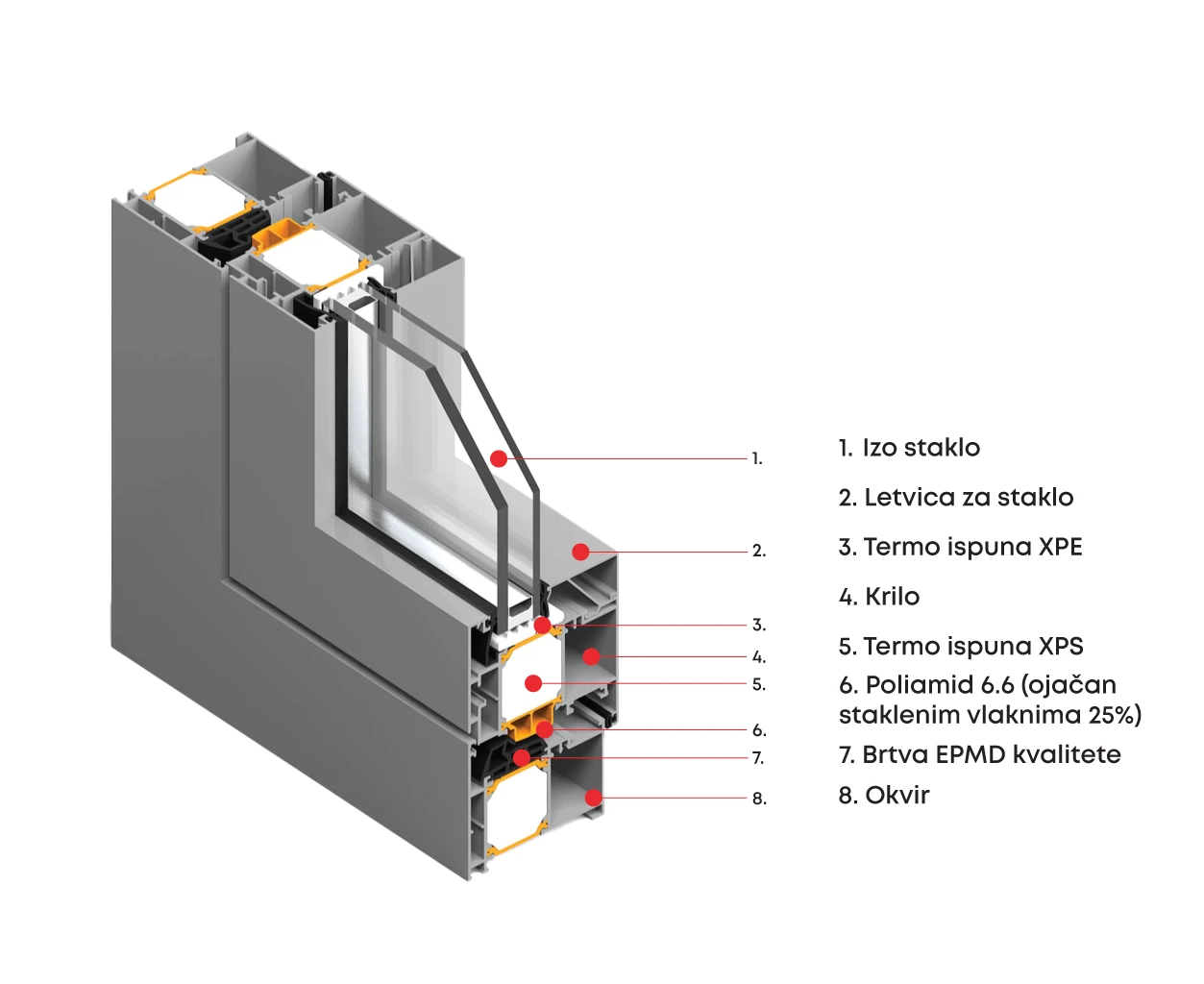
Aluminum profiles with thermal break
DIFFERENT OPENING TYPES
THERMAL AND ACOUSTIC INSULATION
REDUCED ENERGY LOSS
INCREASED INDOOR COMFORT
A thermal bridge is a plastic insert along the profile that serves to separate the outer from the inner part of the profile to prevent moisture condensation.
This technology significantly reduces heat transfer through the window frame, thereby increasing energy efficiency and reducing heating and cooling costs. Such windows are ideal for colder climates or for buildings where maintaining a constant internal temperature is important.
If your needs require high thermal performance, FEAL windows with a broken thermal bridge are the solution.
Significantly reduces heat transfer through the window frame.
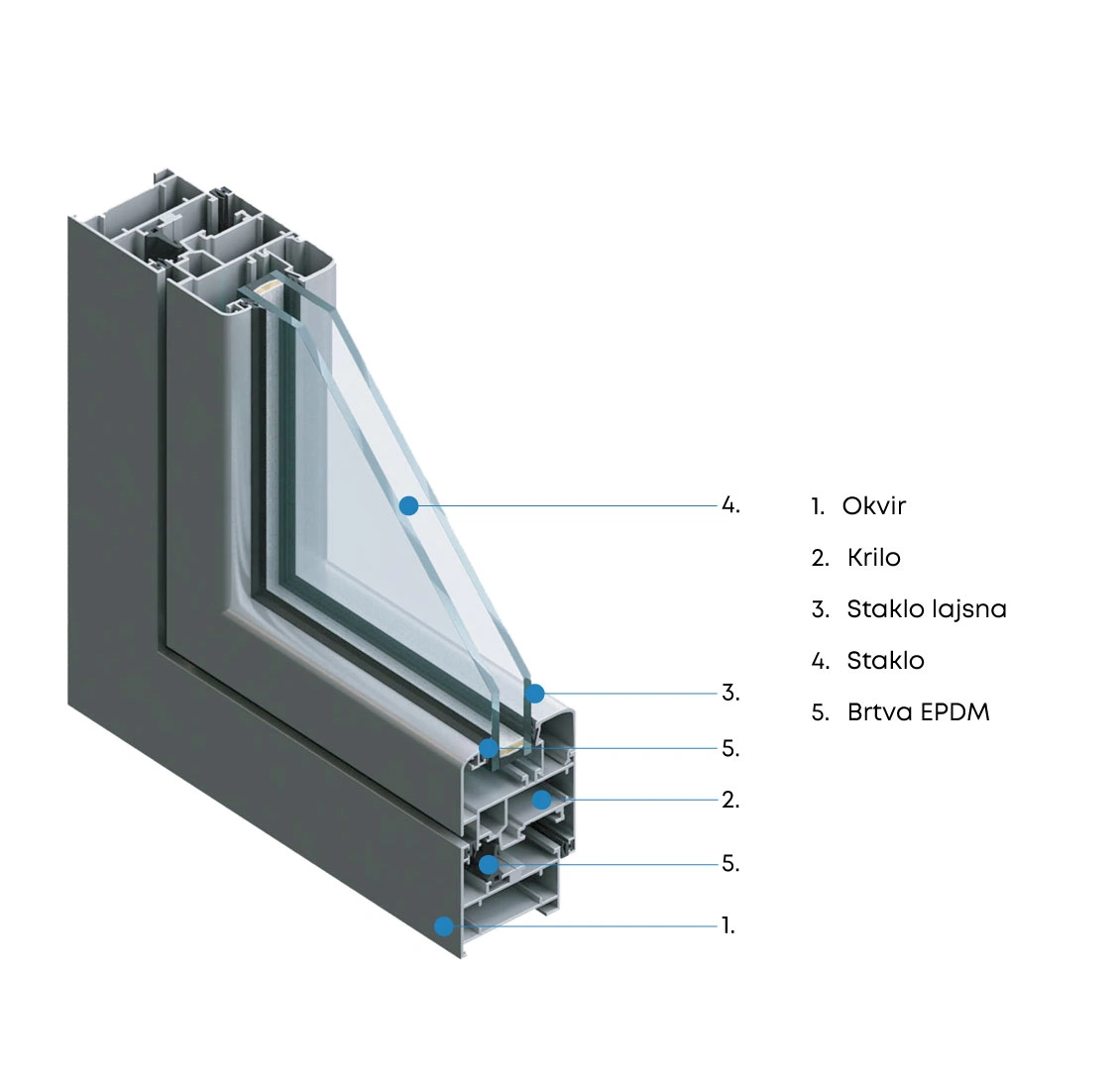
Windows with aluminum profiles without thermal breaks are used in areas where thermal insulation is not necessary, such as interior spaces or buildings in moderate climates.
Although they do not have additional insulation, these profiles retain the strength and aesthetic appeal of aluminum. Windows with profiles without thermal break are simpler and more affordable, but still offer a high level of functionality.
They provide a sustainable and flexible alternative to conventional materials thanks to their numerous advantages such as: durability, narrow visible surfaces, diverse designs, high levels of safety, larger dimensions and the possibility of recycling the base material.
Simpler and more affordable, but still offers a high level of functionality.
Windows can be a key factor in reducing heat loss, which often accounts for as much as 50% of a building's total heat loss. Therefore, it is important to choose high-quality aluminum profiles and glass with a focus on energy efficiency. When designing, pay attention to:
MULTILAYER GLAZING
Insulates better and reduces heat loss
INTERNAL GASES
Filling the space between the glasses with argon further improves efficiency
LOW-E COATING
Reduces heat loss through glass
PASSING COEFFICIENT
HEAT UW
Recommended below 1.4 W/m²K, especially for passive houses
Due to the requirement to reduce energy losses through external walls, windows and doors, FEAL has developed a range of energy efficient systems.






 English (UK)
 Hrvatski
 Deutsch